


Restorative dentistry describes a category of treatment rather than a dental job title. In Plano, TX, fillings, crowns, bridges, dentures, and many implant cases fall within the scope of general dentistry, which is why a general dentist is the usual starting point for a damaged or missing tooth. Complex or unusual cases may be referred to a prosthodontist, endodontist, or oral surgeon after an exam and X-rays.
Searching for a restorative dentist in Plano can be confusing because the word describes a category of treatment rather than a job title. There is no license that reads “restorative dentist” on the wall.
What you are really looking for is the person who repairs damaged or missing teeth, and in most cases that is the same dentist who does your checkups. The complexity of the case decides whether anyone else needs to be involved.
At Vitality Dental, we see a lot of patients who delayed treatment simply because they did not know who to call. Contact us today to find out plainly whether your tooth needs us, a specialist, or nothing more than watching.
How Do You Know You Need Restorative Dentistry?
Preventive care keeps a healthy tooth healthy. Restorative care fixes a tooth that has already been damaged, worn down, or lost.
Restorative Work Versus Preventive Care
Cleanings, exams, X-rays, and fluoride treatments sit on the preventive side because they stop damage before it starts. Restorative work begins the moment there is something to repair.
Once decay breaks through enamel or a tooth fractures, prevention has done what it can. The treatment plan changes from protecting a tooth to rebuilding one.
What Actually Counts as Restorative
Fillings are the most common restorative treatment. Crowns, inlays, onlays, bridges, dentures, and implants all sit in the same category.
Root canal treatment belongs here too, even though people file it separately in their heads. It restores a tooth that would otherwise be lost.
When a Cleaning Is Not Enough
A hygiene visit can remove plaque and tartar, and it can catch a problem early. It cannot rebuild a tooth surface that has already broken down.
If your dentist mentions a watch spot at one visit and a filling at the next, that is the line being crossed. The tooth moved from prevention into repair.
Why Timing Changes the Treatment
The same tooth can need very different work depending on when you get to it. A small area of decay may need a simple filling, while the same tooth left another year may need a crown or root canal treatment.
Delay rarely keeps a problem the same size. It moves the case up a tier.
Signs a Tooth Needs More Than a Filling
Patients often assume any dental problem means a filling. Several common signs point past that.
Pain That Lingers After Hot or Cold
A quick zing that disappears within a second or two is usually ordinary sensitivity. Pain that keeps going after the hot or cold is gone suggests the nerve is inflamed.
That pattern often points toward root canal therapy rather than a routine filling. Only an exam and an X-ray can confirm it.
A Tooth That Has Already Cracked or Chipped
A cracked tooth behaves differently from a decayed one. Filling material relies on surrounding tooth structure for support, and a cracked tooth may not have enough left to hold it.
Cracks also tend to spread under normal chewing force. A crown that wraps and holds the tooth together is often the more predictable option.
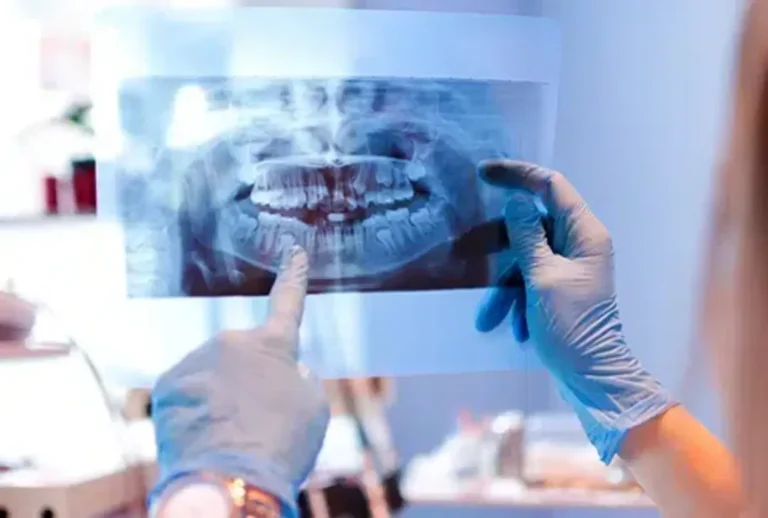
A Filling That Keeps Coming Loose
One filling failing can be bad luck. The same filling failing repeatedly usually means the cavity outgrew what a filling can do.
At that point, the question shifts from what material to use to how much tooth is actually left. That is a different conversation and often a different treatment.
Swelling or a Bad Taste Near the Gum Line
Swelling, a persistent bad taste, or a small bump on the gum can indicate infection at the root. This is not a wait-and-see situation.
Infection can spread, and the treatment window narrows the longer it goes untreated. Call a dental office the same day rather than booking a routine appointment weeks out.
The Dental Roles That Handle Restorative Treatment
Several types of providers do restorative work. They overlap far more than most patients expect.
The General Dentist
About one in five professionally active dentists in the United States is a specialist, and the rest are general dentists, according to the American Dental Association’s Health Policy Institute. Fillings, crowns, bridges, dentures, and many implant cases are standard general practice work.
Many general dentists also pursue advanced training in specific areas. Fellowship in the Academy of General Dentistry, for example, requires 500 hours of approved continuing education, passing the Academy’s Fellowship exam, and three continuous years of membership.
The Prosthodontist
A prosthodontist completes additional accredited residency training after dental school focused on replacing and restoring teeth. Full-mouth reconstruction and complex multi-unit cases are their usual territory.
Referral to a prosthodontist is not routine. It typically happens when a case involves many teeth at once, unusual anatomy, or a rebuild that has already failed elsewhere.
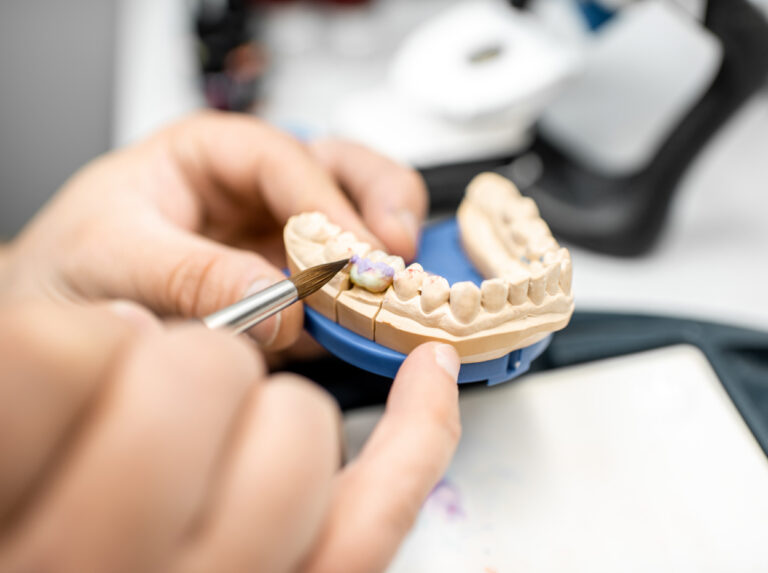
The Endodontist
An endodontist focuses on the inside of the tooth, meaning the pulp and root canal system. They handle difficult root canal cases and retreatment of canals that did not heal.
A general dentist performs a great many root canals without any referral. Curved canals, previous failed treatment, or persistent pain are the usual reasons a case is referred.
The Oral Surgeon
An oral surgeon handles extractions that are more involved than a routine removal, along with jaw and bone procedures. Impacted teeth and cases needing significant bone grafting often go this route.
Surgical work sometimes runs alongside restorative work rather than replacing it. A tooth may be removed by one provider and replaced by another.
Why Plano Patients Usually Start With a General Dentist
The general dentist is the starting point because the diagnosis has to come before the referral. Nobody can tell you which provider you need until someone has looked at the tooth.
| Situation | Who Usually Handles It | Why |
|---|---|---|
| A single chipped or decayed tooth | General dentist | Fillings and single crowns are routine general practice work |
| Decay that has reached the nerve | General dentist, sometimes an endodontist | Straightforward canals are treated in-house; difficult anatomy is referred |
| Several missing teeth being replaced together | General dentist, sometimes a prosthodontist | Depends on how many units are involved and the condition of the bite |
| A tooth that cannot be saved | General dentist or oral surgeon | Routine extractions are done in the practice; impacted or surgical cases are referred |
Starting general also keeps the plan in one place. Whoever restores the tooth has to match it to the bite and the surrounding teeth, and for patients replacing teeth entirely, that one plan is what keeps dental implants predictable rather than piecemeal.
Getting the Right Tooth Fixed by the Right Person in Plano
The honest answer to who does restorative dentistry is that it depends on what the X-ray shows, and no article can tell you that from a distance. What an article can tell you is that the search almost always starts in a general practice.
At Vitality Dental, we would rather look at the tooth and tell you the truth about it, including when the answer is that you need someone else. Call us today to book an exam and find out what your tooth actually needs.
Medical Disclaimer: This article is for general informational purposes only and is not a substitute for professional dental advice, diagnosis, or treatment. Whether a tooth can be restored, and by whom, can only be decided after an in-person examination and X-rays. If you have severe pain, swelling that affects your breathing or swallowing, or a facial injury, seek urgent care immediately rather than waiting for a routine appointment.
Frequently Asked Questions
What kind of dentist does restorative dentistry?
Restorative treatment falls within the scope of general dentistry, including fillings, crowns, bridges, dentures, and many implant cases. There is no separate license called restorative dentist. Complex cases may be referred to a prosthodontist, endodontist, or oral surgeon depending on what the exam and X-rays show.
Is restorative dentistry the same as cosmetic dentistry?
No, though they overlap heavily. Restorative dentistry repairs damaged or missing teeth so they function properly again, while cosmetic dentistry focuses on how they look. A crown can do both jobs at once, which is why the two categories are so often confused with each other.
Do I need a specialist for a dental crown?
Usually not. Crowns are a standard part of general dentistry and are routinely placed in a general practice. A referral becomes more likely when several crowns are being planned together, when the bite needs rebuilding, or when previous crown work has failed.
What is the difference between a general dentist and a prosthodontist?
A general dentist handles the full range of routine dental care including most restorative work. A prosthodontist completes additional accredited residency training after dental school focused specifically on replacing and restoring teeth, and typically takes on complex, multi-tooth reconstruction cases.
Who do I see for a root canal in Plano?
Start with a general dentist. Many general dentists perform root canal treatment routinely as part of standard practice, and only refer the case to an endodontist when the canals are unusually curved, a previous treatment failed, or the tooth is not responding as expected.
Can a general dentist place a dental implant?
Yes, many do. Implant placement is within the scope of general dentistry, and a number of general dentists pursue additional implant training and credentials. Whether a specific case is suitable depends on bone volume, gum health, and overall medical history.
How do I know if my tooth can be saved?
Only an exam and X-ray can answer that. The main factors are how much healthy tooth structure remains, whether the root is intact, and whether infection has reached the surrounding bone. A tooth that looks badly damaged from the outside is sometimes very restorable.
Does restorative dentistry hurt?
Restorative treatment is performed with local anesthetic to numb the area, and patients commonly describe the sensation as pressure rather than pain. Some soreness afterward is normal and usually short-lived. If dental anxiety is the real concern, tell the office before booking so comfort options can be discussed.

