
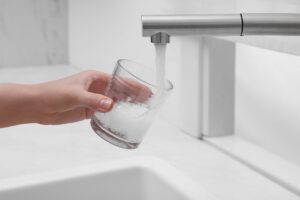
Yes, Plano, TX, does have fluoride in its water. Plano is a member city of the North Texas Municipal Water District, which adjusts the naturally occurring fluoride in its treated water to 0.7 parts per million, the level recommended by Health and Human Services. That low, steady amount of fluoride helps protect enamel between visits, but it does not replace brushing, flossing, or regular dental care.
If you have ever filled a glass at the kitchen sink and wondered whether the water contains fluoride, the answer in Plano is yes. The more useful question is how much, and whether that amount is doing anything measurable for your teeth.
Plano does not treat its own drinking water from scratch. It buys treated water wholesale from a regional district that sets the fluoride level for more than a dozen North Texas cities at the same time.
At Vitality Dental, we hear this question from parents far more often than people expect, usually right after a child’s first cavity. Contact us today to have your family’s decay risk assessed properly instead of guessed at from a water report.
Where Does Plano’s Tap Water Actually Come From?
Plano is one of the thirteen Member Cities of the North Texas Municipal Water District, and one of the ten original members from the district’s founding. The district treats water regionally and sells it wholesale to the cities it serves.
That structure matters for a fluoride question. The decision about how much fluoride ends up in your glass is not made at Plano city hall, and it is not made house by house. It is made once, at the treatment plant, for every member city on the system.
Allen, Frisco, Garland, McKinney, Richardson, and Wylie sit on the same regional system. A household that moves from Richardson to Plano is therefore drinking water treated to the same published fluoride target.
How Much Fluoride Is in Plano Tap Water?
The district publishes a specific target rather than a vague range. That number is the single most useful figure in this entire discussion.
Fluoride Is Already in the Source Water
Fluoride is a naturally occurring mineral, and it is present in North Texas source water before any treatment happens. The district reports an average concentration of 0.3 parts per million in its source water and describes its process as adjusting that naturally occurring fluoride rather than introducing the mineral from zero.
This distinction gets lost in most online arguments about fluoridation. The practical effect is that the treatment plant is moving an existing number up toward a target, not creating something that was never there.
The 0.7 Parts Per Million Target
 The North Texas Municipal Water District states that it adjusts fluoride levels in treated water to 0.7 parts per million. That is under one milligram per liter, small enough that it changes nothing you can taste, smell, or see.
Because the change is undetectable at the tap, most households have no idea whether their water is fluoridated. The number only surfaces if you go looking for it in a water quality report.
Who Decides the Number
The district attributes the 0.7 parts per million target to Health and Human Services recommendations rather than to its own judgment. It also lists endorsement from the American Dental Association, the American Medical Association, the Centers for Disease Control and Prevention, the United States Public Health Service, and the World Health Organization.
That is worth knowing if you have read something alarming online. The level in your tap is a published federal recommendation being followed by a regional utility, not a local improvisation.
How the Level Is Reported Each Year
The district publishes an annual water quality report, also known as a Consumer Confidence Report, covering the previous calendar year. Fluoride appears in it alongside the other parameters the district routinely tests, and its monthly reports list fluoride as a monthly average.
Your city utility publishes its own annual report as well. If you want the actual measured average instead of the target, those two documents are where it lives.
What Does Fluoride Do to a Tooth?
Enamel is under constant low-level attack. Every time you eat or drink something acidic or sugary, oral bacteria produce acid that pulls minerals out of the enamel surface, a process called demineralization.
Fluoride works on the other side of that exchange. It helps the tooth take minerals back in, and the rebuilt surface is more acid-resistant than what was there before.
The important word is helps. Fluoride at 0.7 parts per million slows the loss and supports the repair, but it cannot outrun a diet high in sugar, a missed brushing routine, or a tooth that already has a cavity in it. Once decay has broken through enamel, no amount of tap water reverses it, and the fix moves into restorative treatment instead.
Who Needs More Than Tap Water Fluoride?
Municipal fluoridation is a population-level measure. It is set for an entire region, which means it will be more than enough for some people and not enough for others.
People With a History of Repeat Cavities
Several fillings in a short span is a pattern that suggests tap water fluoride alone is not carrying the load. A dentist can prescribe a higher-concentration fluoride toothpaste or apply an in-office varnish, both of which deliver far more fluoride than drinking water does.
Repeat decay usually points at something specific: diet, saliva, brushing technique, or the shape of the teeth themselves. Regular preventive dentistry visits are where that cause gets pinned down.
Anyone Dealing With Dry Mouth
 Saliva is the mouth’s own buffer against acid, and plenty of common medications reduce it. Antidepressants, blood pressure medication, antihistamines, and cancer treatment can all leave a patient with noticeably less saliva.
A dry mouth strips away the natural protection that fluoride is meant to work alongside. Reduced saliva is a common reason a dentist will raise the option of a prescription-strength fluoride product, regardless of what the tap water contains.
Households That Filter or Buy Their Water
Reverse osmosis and distillation can remove most fluoride from tap water. Standard carbon pitcher filters and refrigerator filters generally do not, though the manufacturer’s own specification sheet is the only reliable answer for a given model.
Bottled water is the bigger unknown, since fluoride content varies by brand and is rarely printed clearly on the label. Families who drink mostly bottled water should mention it at their next visit, and it is a routine part of what we check during children’s dentistry appointments.
What Plano Families Should Do With This
Knowing the number is useful, but 0.7 parts per million is a starting point rather than a verdict on your teeth. Two people drinking identical water can have completely different decay risk depending on saliva, diet, medication, and habits.
At Vitality Dental, we would rather look at your actual mouth than estimate from a utility report. Call us today to book a checkup and get a straight answer about whether your family needs more fluoride protection than the tap already provides.
Medical Disclaimer: This content is for general informational purposes only and does not substitute for an in-person evaluation by a licensed dentist. Individual results vary based on the patient’s oral health, anatomy, and treatment plan.
Frequently Asked Questions
Does Plano, TX have fluoride in its water?
Yes. Plano is a Member City of the North Texas Municipal Water District, which adjusts the naturally occurring fluoride in its treated water rather than leaving it at source levels. Plano buys all of its treated water from the district, so households on city water receive fluoridated water at the same target level as the district’s other member cities.
How much fluoride is in Plano tap water?
The North Texas Municipal Water District adjusts fluoride in treated water to 0.7 parts per million. That target follows Health and Human Services recommendations. The actual measured average for a given year appears in the district’s annual water quality report and in your city utility’s own report.
Is 0.7 parts per million of fluoride safe to drink?
The 0.7 parts per million level is the concentration recommended by Health and Human Services, and the water district lists endorsement from the American Dental Association, the American Medical Association, the Centers for Disease Control and Prevention, the United States Public Health Service, and the World Health Organization. If you have a specific medical concern about fluoride, raise it with your physician and your dentist.
Does a water filter remove fluoride from Plano tap water?
Reverse osmosis systems and distillation can remove most fluoride. Standard carbon pitcher filters and refrigerator filters usually do not. Filter performance varies by model, so check the manufacturer’s specification sheet for your unit rather than assuming based on filter type.
Do I still need fluoride toothpaste if Plano water is fluoridated?
Yes. Drinking water delivers a low, brief exposure, while toothpaste holds a much higher concentration against the tooth surface for a longer period. The two work differently and the tap water version does not replace brushing twice daily with a fluoride toothpaste.
Does bottled water have fluoride?
It depends entirely on the brand and the source. Some bottled waters contain naturally occurring fluoride, some have it added, and many purified brands have had most of it removed during processing. The label rarely states the amount clearly, so households drinking mostly bottled water should mention it at a dental visit.
Do children in Plano need fluoride supplements?
Usually not, because children drinking Plano city water are already receiving fluoridated water. On October 31, 2025, the Food and Drug Administration advised that ingestible fluoride drug products should not be given to children under age three, or to any child at low or moderate risk of tooth decay. That decision belongs to a dentist or pediatrician after a caries risk assessment, not to a reading of a water report.
How can I find out what is in my Plano water this year?
The North Texas Municipal Water District publishes an annual water quality report covering the previous calendar year, and your city utility publishes its own. Both list fluoride alongside the other parameters routinely tested, and both are free to view on the respective official websites.

 Best things to do in Plano, TX: From Nature Parks to Haunted Houses