


A Plano dentist usually recommends a crown to protect a tooth that is weak, cracked or holding a large filling. Before you agree, ask why a smaller repair will not do. Ask what could happen if you wait and which material fits the tooth. If cost is the worry, ask which work is urgent and which payment options the office accepts.
Last Updated: November 11, 2026
- How Dentists Decide a Tooth Needs a Crown in Plano
- 1. Could a Smaller Repair Work Instead of a Crown?
- 2. What Could Happen if I Wait on This Crown?
- 3. Which Crown Material Fits This Tooth?
- 4. How Many Visits Will It Take, and What Happens in Between?
- 5. What Will This Cost, and What Are My Options if Money Is Tight?
- 6. Should I Get a Second Look Before I Decide?
- Deciding on Your Crown With a Plano Dentist You Trust
- Frequently Asked Questions
Hearing that you need a crown can feel sudden, especially when the tooth does not even hurt. This guide gives you the questions to ask before you say yes.
At Vitality Dental, we want you to ask every question before any work starts. MedlinePlus describes a crown as a tooth-shaped cap that covers the tooth above the gum line.
If cost is what holds you back, question 5 below helps you plan it with your dentist. You can sort what is urgent from what can wait, then look at payment options.
How Dentists Decide a Tooth Needs a Crown in Plano
A crown covers the whole visible part of a tooth, and dentists often suggest one when too little tooth is left to hold a filling. A cracked, broken or worn tooth may need one too, and so do most teeth after a root canal.
What a Crown Does for a Tooth
MedlinePlus says you may need a crown to support a weak tooth or to make a tooth look better.
The American Dental Association (ADA) lists other uses too. A crown can protect a weak tooth from breaking or restore one that is already broken.
It can also hold a bridge in place or cover a dental implant. Because one word covers several jobs, it helps to ask which job your crown is for.
The Usual Reasons Behind the Recommendation
MedlinePlus lists the common reasons. They include a large cavity with too little natural tooth left for a filling, and a chipped or broken tooth.
A tooth worn down or cracked from grinding can need one, as can a stained or badly shaped tooth. MedlinePlus also notes that large fillings and weak teeth raise the risk of a tooth breaking.
A crown is common after a root canal, too. MedlinePlus says one is needed in most cases to seal and protect the tooth. We often recommend one after root canal therapy in Plano.
What the Exam and X-Rays Should Show You
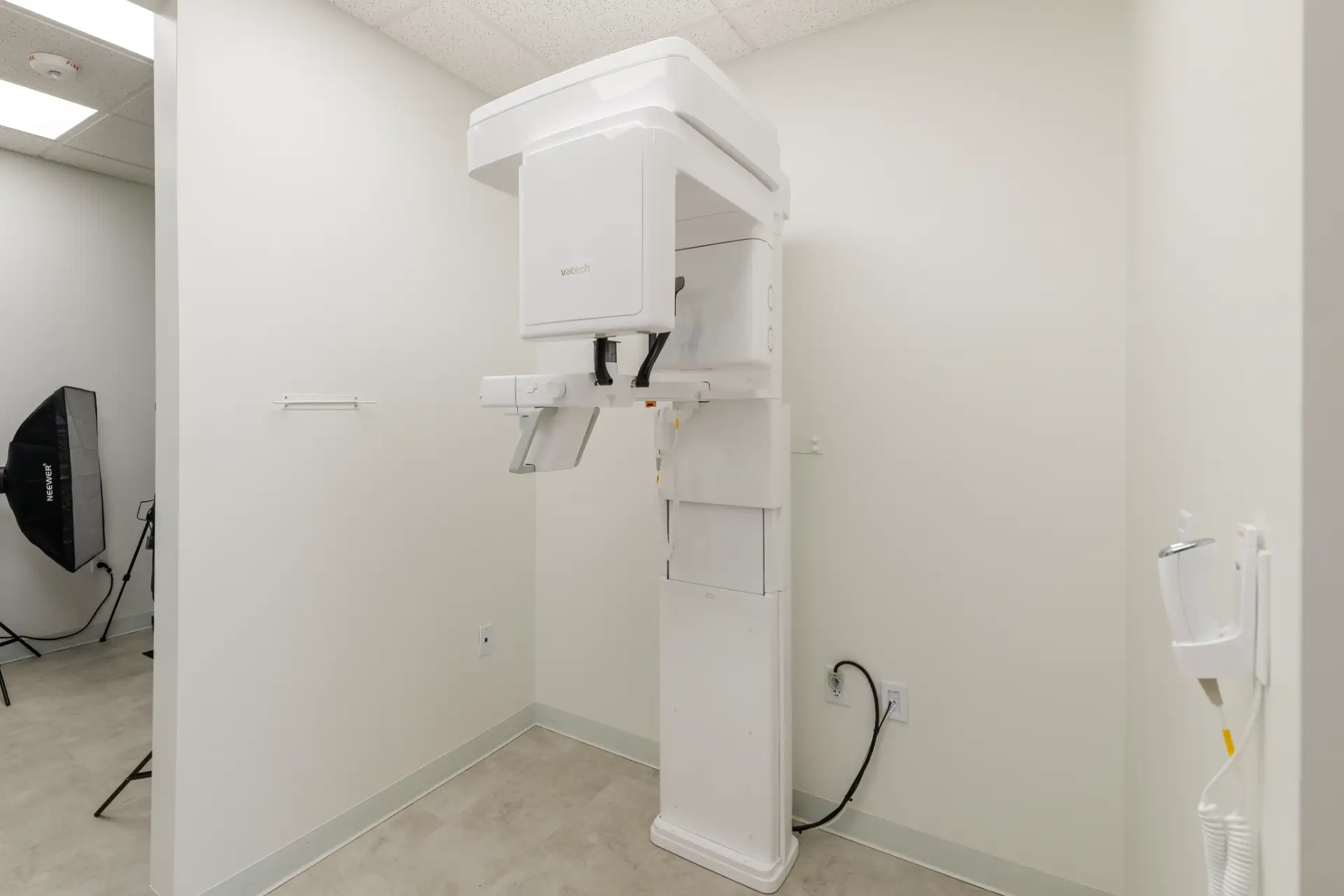
Before you agree, ask your dentist to show you the reason on the screen or the X-ray. You may be shown a crack or the size of an old filling.
Ask how much healthy tooth is left around that spot. That one detail often shapes the choice between a crown and a smaller repair. A clear answer here makes the next five questions easier to weigh.
1. Could a Smaller Repair Work Instead of a Crown?
Ask whether a filling or an onlay could do the job. The ADA says you have the right to decide on treatment and materials after talking with your dentist. The answer depends on how much sound tooth remains and where the damage sits.
| Repair | What It Covers | When a Dentist May Suggest It |
|---|---|---|
| Filling | Fills a cavity inside the tooth | Small to mid-size cavities under moderate chewing pressure |
| Inlay or onlay | Rebuilds part of the tooth and is more conservative than a crown | Moderate decay or a fracture that does not need full coverage |
| Crown | Caps the whole tooth above the gum line | Too little tooth left to hold a filling, or a cracked, broken or worn tooth |
The ADA notes that dentists choose filling materials case by case, based on the size and location of the cavity. We place fillings, inlays, onlays and crowns, so you can ask about each one.
Our page on crowns, onlays and other restorative dentistry shows how these repairs differ.
2. What Could Happen if I Wait on This Crown?
A weak or cracked tooth can break further, and deep decay can reach the soft inside of the tooth. Then the tooth may need a root canal or may be lost. There is no set safe waiting time, so ask how urgent yours is.
MedlinePlus says treatment is less painful and less expensive when it is done early. Our guide to root canal alternatives and how that choice gets made covers the next step if the nerve is involved.
MedlinePlus advises calling your dentist for a throbbing toothache that will not go away or a pimple-like bump on your gums. If swelling spreads into your jaw or neck, or you have trouble breathing or swallowing, call 911 or go to the nearest ER.
For short-term relief while you wait, see the 3-3-3 rule for tooth infection pain.
3. Which Crown Material Fits This Tooth?
Each crown material has trade-offs, so ask why your dentist chose one for this tooth. MedlinePlus says metal crowns hold up to chewing and grinding but do not look natural. Ceramic and porcelain crowns match tooth color but wear down opposing teeth more than metal.
MedlinePlus adds that ceramic may suit people with a metal allergy. Resin crowns wear down faster and are more likely to crack.
For back teeth we use zirconia, and for teeth in the smile zone we use layered lithium disilicate. If you grind your teeth, ask whether that changes the choice, and read what damages teeth the most.
4. How Many Visits Will It Take, and What Happens in Between?
Most crowns take two dental visits. At the first, the tooth is reshaped and measured, and a temporary crown protects it. The final crown is fitted at the second visit, so ask how to care for the temporary crown in between.
At our office, we scan the tooth digitally instead of using impression trays. MedlinePlus gives a few simple rules for a temporary crown:
- Floss: slide it out sideways, since lifting it up can pull the crown off.
- Food: avoid sticky foods such as caramels, gum and bagels.
- Chewing: use the other side of your mouth when you can.
Call your dentist if the temporary comes off, your bite feels wrong or swelling gets worse. If dental visits make you nervous, we offer nitrous oxide and oral sedation.
5. What Will This Cost, and What Are My Options if Money Is Tight?
Ask for the full treatment plan and your share of the cost before you start, including what your insurance may pay. Then ask which work is urgent and which can be scheduled later. Last, ask which payment options the office accepts.
The ADA lists insurance coverage and out-of-pocket costs among the things to weigh when choosing a filling. At our planning visit, we explain your options and talk through your goals, needs and budget.
We check your benefits before treatment starts, and we accept HSA and FSA cards, most major PPO plans, CareCredit and flexible payment options. To ask us to check your benefits first, call (972) 964-3800.
Without insurance, our in-house dental plan has no deductibles, no yearly maximums and no waiting periods. It also gives discounts on restorative services.
6. Should I Get a Second Look Before I Decide?
Asking for a second look is reasonable before any large treatment. The ADA code of ethics says patients have the right to be involved in decisions about their treatment. Ask your dentist to show you what they see and explain why a crown fits.
The ADA describes treatment planning as a shared decision between you and your dentist.
Our post on which dentist does restorative work in Plano explains who places crowns.
This post is general information and not a diagnosis. Ask your dentist whether this applies to you.
Deciding on Your Crown With a Plano Dentist You Trust
A crown recommendation is easier to accept once you know the reason, the other options and the risk of waiting for your tooth. Material, visits and cost are fair questions too, and a clear answer to each helps you decide with confidence.
At Vitality Dental, we walk through every question with you before any work begins. When you are ready, book an appointment and bring your questions.
Frequently Asked Questions
What to do if you need a crown but can’t afford it?
Start by asking your dentist which part of the work is urgent and which can wait. Ask for the full plan and your share of the cost. Then ask about payment options, such as CareCredit or an in-house plan, so you can plan how to pay.
Why do dentists push for crowns?
The ADA says a recommended crown is probably meant to correct a problem with the tooth. Those problems include a weak or broken tooth, or one with a large filling. That does not make every crown urgent, so ask what your dentist sees and why.
How do you tell if you really need a crown?
Only an exam can tell, but you can ask the right questions. Ask how big the old filling is, whether there is a crack and how much of the tooth is still healthy. MedlinePlus says a crown may be needed when too little tooth remains to hold a filling.
How long can I go without getting a crown?
There is no set safe waiting time, and it depends on the tooth. MedlinePlus warns that a weak or heavily filled tooth is more likely to break. Ask your dentist how urgent your tooth is, and call sooner if pain or a gum bump appears.
Is there a downside to getting a crown?
Yes, there are a few. Getting a crown means reshaping the tooth, and MedlinePlus says a crown can chip, crack or come loose. A tooth that still has its nerve may also feel sensitive to hot and cold for a while.
Can a tooth still rot under a crown?
Yes, MedlinePlus says the tooth under a crown can still get a cavity, even though the cap covers it. To lower the risk, brush twice a day and floss once a day. Keep up with your regular checkups so any problem can be found early.
At what point can you not put a crown on a tooth?
A crown needs enough tooth underneath to hold it. MedlinePlus says a crown can fall off if the core of the tooth is too weak. If the nerve is affected, a root canal may come first, or the tooth may need to be removed and replaced. Our post on what happens to the jawbone after a tooth is lost explains why replacing a missing tooth matters.

 Root Canal Alternatives and How the Choice Gets Made in Plano