
What disqualifies you for veneers is usually active tooth decay, untreated gum disease, too little remaining enamel, heavy grinding, or a bite problem that has not been corrected. Most of these are temporary blocks rather than a final no, and treating the underlying issue often reopens the option. Candidacy in Plano is decided by an in-person exam and X-rays, never by a photograph or an online quiz.
Veneers get discussed as though the only question is whether you want them. In practice, the teeth underneath decide most of it.
A veneer is a thin shell bonded to the front of a tooth, which means it needs a sound tooth to bond to. Anything compromising that foundation has to be dealt with before the cosmetic work starts.
At Vitality Dental, we would rather explain why the answer is not yet than hand someone a result that fails early. Contact us today to find out where you actually stand.
How a Dentist Decides What Disqualifies You for Veneers
Veneer candidacy is not a single yes or no. It is a sequence of checks, and a problem found at any point pauses the process rather than ending it.
 The assessment starts with health and moves to structure, then to habits, then to expectations. A tooth has to be free of disease, thick enough to bond to, protected from destructive force, and positioned well enough that a shell on the front can produce the look the patient is after.
That order matters. Bonding a veneer over an unresolved problem does not resolve it, and the work bonded on top is the part most likely to fail.
Step 1: Rule Out Active Tooth Decay
Active decay is the most common reason a veneer plan gets paused. A veneer bonds to enamel, and decayed tooth structure does not hold a bond reliably.
Covering a cavity also hides it. The decay continues underneath where it is harder to detect and monitor, and by the time it surfaces the tooth may need far more than a veneer.
What typically has to happen first:
- Any active cavities restored so the tooth surface is sound and stable
- Old failing fillings assessed, because a veneer margin sitting on failing material will leak
- Decay risk addressed, since a patient who keeps getting cavities will keep getting them under veneers
- A follow-up check to confirm the restored surfaces are holding before cosmetic work begins
Once the mouth is stable, the veneer conversation restarts. This is a delay, not a disqualification.
Step 2: Get Gum Disease Under Control
Veneers sit right at the gum line, so the gums are part of the result whether anyone planned for that or not. Inflamed, bleeding, or receding gums undermine both the health and the appearance of the finished work.
Gum disease also moves the goalposts. If the gum line recedes after the veneers are made, the margin becomes visible and the shape no longer matches what was planned.
What usually has to be resolved first:
- Bleeding and inflammation treated so the gum position is stable before any impressions are taken
- Deep cleaning completed where pockets have formed around the teeth
- A stable home routine established, because the result depends on maintenance
- Bone support confirmed on X-ray, since teeth with reduced support are a poor foundation for cosmetic work
Ongoing preventive care is what keeps that stability afterward. Veneers do not remove the need for it.
Step 3: Measure How Much Enamel Is Left
Veneers bond to enamel, and traditional veneers require a small amount of it to be removed first. A tooth that has already lost significant enamel may not have enough left to work with.
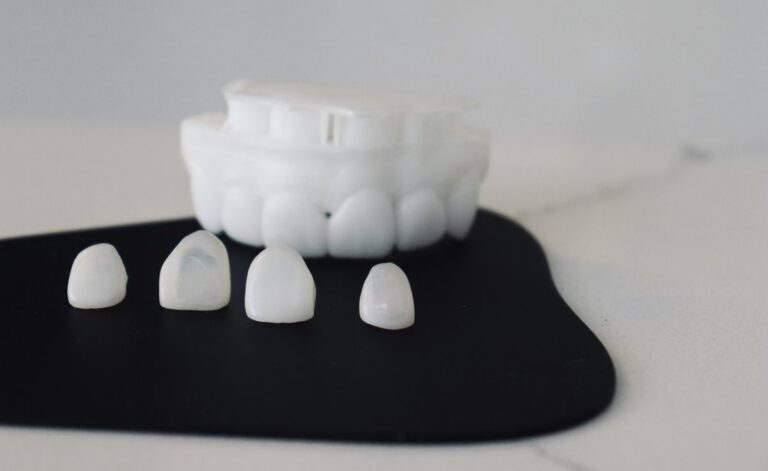 Enamel loss happens through erosion from an acidic diet or reflux, through years of aggressive brushing, or through grinding. It also happens on teeth that have been heavily restored already, where much of the original surface is now filling material.
If the enamel is too thin, the honest options change. A crown covers the whole tooth rather than the front face and may become the appropriate treatment instead, which moves the case from cosmetic into restorative territory.
Step 4: Deal With Grinding and Clenching
Grinding is one of the strongest reasons a veneer plan gets reconsidered. Porcelain is strong under compression and vulnerable to the sideways shearing force that grinding produces.
Many patients do not know they grind. Flattened biting edges, morning jaw soreness, and a partner who mentions the noise are more reliable indicators than self-report.
Grinding does not automatically disqualify anyone, but it does change the plan:
- The habit is documented first, including where the wear appears and how severe it is
- A night guard is usually part of the plan, not an optional extra afterward
- Material and thickness are reconsidered based on the forces involved
- The patient is told plainly that veneers placed over uncontrolled grinding carry a real risk of chipping
That conversation is better had before the work than after it.
Step 5: Check the Bite and the Alignment
Veneers change the front surface of a tooth. They do not move it.
Significant crowding, rotation, or a bite that does not meet evenly will still be there underneath. Trying to correct heavy misalignment with porcelain alone usually means removing more tooth structure than is wise, and the result can look bulky rather than natural.
For mild irregularity, veneers can convincingly produce a straighter appearance. For anything past mild, correcting the alignment first with orthodontics and braces or clear aligners, then adding veneers if still wanted, tends to give a better and more conservative result.
Step 6: Match Expectations to What Veneers Can Do
The last check is not clinical. It is whether veneers actually solve the problem the patient came in with.
| What the Patient Wants | Whether Veneers Address It | What Usually Comes First |
|---|---|---|
| Whiter front teeth | Yes, and the shade is chosen rather than bleached | A discussion about whether whitening alone would do the job first |
| A chipped or worn front edge | Often yes, depending on how much tooth remains | Finding out why it chipped, so it does not happen again |
| Crowded or rotated teeth | Only for mild cases; veneers cover, they do not move teeth | An orthodontic assessment |
| A tooth that is sensitive or painful | No, that is a health issue and not a cosmetic one | Diagnosis and treatment of the cause |
A good cosmetic dentistry consultation includes the option of saying that veneers are not the right tool for what you want. That is a useful answer, not a lost sale.
Finding Out Where You Stand in Plano
Most of the reasons above are treatable rather than final. Most people who hear “no” are hearing “not yet,” with a specific list of what has to happen first.
At Vitality Dental, we will tell you exactly which step you are stuck on and what it would take to move past it, without any pressure to book something today. Call us today to arrange a consultation and get a real answer about your own teeth.
Medical Disclaimer: This content is for general informational purposes only and does not substitute for an in-person evaluation by a licensed dentist. Individual results vary based on the patient’s oral health, anatomy, and treatment plan.
Frequently Asked Questions
What disqualifies you for veneers?
Active tooth decay, untreated gum disease, insufficient remaining enamel, uncontrolled grinding, and significant bite or alignment problems are the usual reasons veneers are ruled out. Most of these are treatable, so the block is often temporary. Only an exam with X-rays can determine which apply to you.
Can you get veneers with gum disease?
Not while it is active. Veneers sit at the gum line, so inflamed or receding gums compromise both the fit and the appearance of the finished result. Once the disease is treated and the gum position is stable, veneers can usually be reconsidered.
Can you get veneers if you grind your teeth?
Sometimes, but the grinding has to be managed first. Porcelain resists compression well and is more vulnerable to the sideways force grinding creates. A night guard is normally part of the plan rather than an optional extra, and the risk is discussed openly beforehand.
Do you need healthy teeth to get veneers?
Yes. A veneer bonds to the tooth underneath it, so that tooth must be free of active decay and structurally sound. Veneers cover a surface rather than treat a problem, and placing one over an untreated issue tends to shorten the life of the work.
Can you get veneers instead of braces?
For mild crowding or slight rotation, veneers can create a straighter appearance. For anything more than mild, they cannot substitute for orthodontic treatment because they cover teeth rather than move them. Correcting alignment first usually gives a better and more conservative result.
Is there an age limit for veneers?
Age itself is not the deciding factor, though veneers are generally not placed on teeth that are still developing. Younger patients are often advised to wait until growth is complete. Suitability at any age depends on the health of the teeth and gums rather than the number.
What happens if you are not a candidate for veneers?
You are usually given a sequence rather than a refusal, starting with whatever has to be treated first. Alternatives such as whitening, bonding, crowns, or orthodontic treatment may achieve the same goal. The right option depends on what you want to change and what the exam finds.
How do I find out if I qualify for veneers in Plano?
Book a consultation that includes an exam and X-rays. A dentist assesses decay, gum health, remaining enamel, grinding, and bite, then explains which of those need attention. No online assessment or photograph can replace that, because most of the deciding factors are not visible in a picture.

 What Destroys Teeth the Most?