
For many people in Plano, dental implants at 70 can still be worth it, because overall health usually matters more than age. Reviews of studies in adults over 65 and over 75 found implants a predictable option. Bone, gum health, diabetes control, smoking, certain bone medicines and daily cleaning often decide whether implants suit you, and an exam answers that.
Last Updated: October 15, 2026
- Does Age Matter for Dental Implants at 70 in Plano?
- What Health Factors Decide Whether Implants Make Sense After 70?
- How Do Implants Compare With Dentures for Seniors in Plano?
- What Does Getting an Implant at 70 Look Like in Plano?
- Deciding Whether Implants Are Worth It for You in Plano
- Frequently Asked Questions
Turning 70 does not close the door on dental implants. The real question is whether your health and mouth are ready.
Missing teeth are common at this age. NIDCR data from 2017 to March 2020 show that about 15% of US adults aged 65 and older have no natural teeth left.
At Vitality Dental, we look at your health picture before we talk about implants. This guide covers what research says about age, which health factors matter most, and what to expect in Plano.
Does Age Matter for Dental Implants at 70 in Plano?
Age alone is usually not what decides implant candidacy. The American Dental Association notes that your health is more of a factor than your age, and a 2017 review of adults 65 and older concluded that age alone should not be a limiting factor when implants are considered.
A 2018 review of people 75 and older described implants as a predictable treatment option in that group. Reported survival rates are group averages, not a promise for any one person.
Dentists weigh the benefits against your medical conditions, and the ADA notes a dentist may ask your physician to evaluate you before surgery.
What Health Factors Decide Whether Implants Make Sense After 70?
The factors that most often shape the answer are jawbone volume, bone medicines, diabetes control, smoking, gum health and how easily you can clean around an implant. None of these automatically rules implants out, and each one may change the plan or its timing.
Jawbone Volume and Bone Grafting
An implant needs enough bone to anchor in. After a tooth is lost, the jawbone tends to shrink, mostly in width, and much of that change happens in the first year.
If years have passed since a tooth was removed, a bone graft may be needed first. Grafting adds a step, time and its own risks.
Our bone loss timeline after a missing tooth shows how this unfolds, and the FDA lists helping keep the jawbone from shrinking among the benefits implants can offer.
Osteoporosis and Bone-Strengthening Medicines
Recent pooled studies suggest osteoporosis by itself does not appear to lower implant survival, though the evidence is limited. The medicine matters more than the diagnosis.
Bisphosphonates have been linked to a small risk of a jawbone problem called medication-related osteonecrosis of the jaw, or MRONJ. Low-dose osteoporosis treatment and high-dose bone drugs used in cancer care carry very different levels of risk.
If you take a bone-strengthening medicine, tell your dentist and the doctor who prescribed it, including how long you have taken it.
Diabetes, Smoking and Gum Disease
Chronic conditions such as diabetes may interfere with healing. Uncontrolled diabetes is the bigger concern, so well-managed diabetes does not automatically rule implants out.
The FDA notes smoking may affect healing and long-term success, and studies link smoking with a higher failure risk. Gum disease is usually brought under control first, because a history of periodontitis is linked with higher risk.
Many people in their 70s take blood thinners. Bring your full medicine list, and your dentist may coordinate with your doctor.
Daily Cleaning and Hand Dexterity
An implant still needs daily cleaning, and the FDA lists difficulty cleaning around an implant among the possible risks. Arthritis, tremor or memory changes can make home care harder.
A family member or caregiver may help, and some designs are easier to clean than others.
Dry mouth, often caused by medicines, raises the risk of decay and mouth infections, so mention it at your visit.
How Do Implants Compare With Dentures for Seniors in Plano?
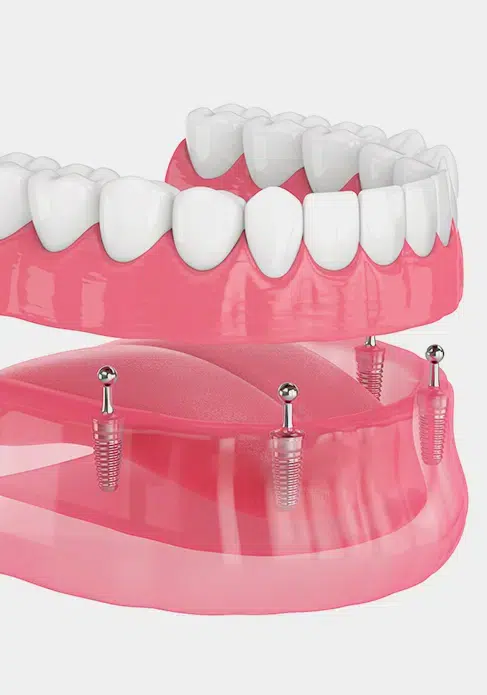
Implants and dentures can both restore chewing and appearance. For people with no lower teeth, two consensus statements, McGill in 2002 and York in 2009, named a two-implant overdenture, which snaps onto implants instead of resting only on the gums, as the first choice for the lower jaw.
Studies have measured stronger bite force with implant overdentures than with full dentures, and patients may find them more satisfying, though the size of that benefit is still uncertain.
Conventional dentures remain a valid choice and make eating easier than having no teeth. For one or a few missing teeth, a bridge depends on healthy neighboring teeth. Our post on what All-on-4 implants change for denture wearers compares full-arch options.
What Does Getting an Implant at 70 Look Like in Plano?
The process usually runs from a consultation and 3D scan to placement, a healing period while bone bonds to the implant, and a final tooth or denture. At our Plano office, consultation to final crown typically takes four to seven months, varying by case.
The Consultation and 3D CBCT Scan
The first visit reviews your medical history, medicines and goals. We take a 3D CBCT scan in our Coit Road office to see how much bone is available and whether grafting may be needed.
We place dental implants in Plano using 3D-guided implant surgery and handle each stage, from imaging to the final crown, under one roof.
For people missing most or all teeth, we also discuss implant-supported dentures, including snap-in overdentures on two to four implants per arch and All-on-4 fixed arches.
Comfort Options During Treatment
We offer three sedation options: nitrous oxide, oral conscious sedation and IV sedation.
Before sedation, we review your history and medicines and coordinate with your primary care physician if needed. During IV sedation, pulse oximetry, capnography and blood pressure are monitored throughout.
For oral or IV sedation, you must have a driver, so plan the ride before the appointment.
Healing Time and Follow-Up Visits
After placement, bone grows around the implant in a process called osseointegration. The FDA notes healing may take several months or longer, and at our office it typically takes three to six months.
Some patients can receive temporary teeth soon after placement, depending on the exam.
Our day-by-day guide to implant recovery covers the first week.
Paying for Treatment When Medicare Does Not
According to Medicare.gov, Original Medicare in most cases does not cover dental services, dentures or implants. Some Medicare Advantage plans may offer dental benefits, so check your own plan directly.
We offer a complimentary insurance benefits check, a membership plan for patients without insurance, and third-party financing such as CareCredit, subject to lender approval.
Our guide to the cost of a dental implant in Plano explains what affects the total.
Deciding Whether Implants Are Worth It for You in Plano
For many 70-year-olds, whether implants are worth it depends on health, bone and daily routine more than the number on the calendar. A consultation with an exam and a 3D scan turns that general picture into a clear plan for your own mouth.
At Vitality Dental, we explain every option, including dentures and bridges, so you can choose what fits your health and goals. Call us today to arrange an implant consultation, or send your questions through our contact page.
Medical Disclaimer: This post is general information and not a diagnosis. It does not substitute for an in-person evaluation by a licensed dentist. Individual results vary based on the patient’s oral health, medical history, and treatment plan.
Frequently Asked Questions
Who is not a good candidate for dental implants?
People with uncontrolled diabetes, active gum disease, too little jawbone, heavy smoking, or high-dose bone medicines for cancer may not be good candidates, at least not yet. Many of these can be treated or managed first, so an exam usually decides whether implants fit now or later.
What percentage of 70 year olds have false teeth?
NIDCR data from 2017 to March 2020 show about 15% of US adults 65 and older have no natural teeth, rising to 19.7% at 75 and older. Many more have lost some of their teeth. Our guide to dental care for seniors in Plano covers related concerns.
Should an 80 year old get dental implants?
An 80-year-old can be a candidate when overall health, bone and the ability to clean daily support it. A review of patients 75 and older found implants a predictable option, but each case is weighed against medical conditions, so ask your dentist whether this applies to you.
At what age should you not get a tooth implant?
There is no set upper age limit. The ADA notes health is more of a factor than age, and a review of adults over 65 found age alone should not rule implants out. Suitability at any age comes down to bone, health and an in-person exam.
Will Medicare pay for dental implants for seniors?
In most cases, Original Medicare does not cover dental implants, dentures or routine dental care, according to Medicare.gov. Some Medicare Advantage plans may include dental benefits, which vary by plan, so check your plan documents or call the plan directly before treatment.
How do you get implants when you can’t afford them?
Options can include a Medicare Advantage or private dental plan, an in-office membership plan, third-party financing, or phasing treatment over time. Overdentures on fewer implants or conventional dentures may also be discussed, so ask your dentist what each choice involves for your own mouth.
Is it better to get teeth implants or dentures?
Neither is better for everyone. Implants and implant overdentures can feel more stable and help limit bone shrinkage, while conventional dentures avoid surgery and suit people who cannot have implants. Your health, bone, budget and preferences decide which option fits you.
Why would a dentist not recommend an implant?
A dentist may advise against an implant, or delay it, because of too little bone, active gum disease, uncontrolled diabetes, smoking, recent head and neck radiation, or certain bone medicines. Trouble cleaning around an implant can also make another option safer.

 What Disqualifies You for Veneers in Plano?