
Key Takeaways
- A standard dental cleaning and exam typically takes 60–90 minutes and includes check-in, X-rays (if needed), professional cleaning, a comprehensive exam by the dentist, and a treatment discussion.
- The hygienist “calls out numbers” during periodontal charting to measure gum pocket depths—a key indicator of gum health.
- Modern dental technology, like digital X-rays, intraoral cameras, and ultrasonic scalers make visits faster, more accurate, and more comfortable than ever before.
- At Vitality Dental in Plano, we cater to anxious patients with sedation options, transparent pricing, and a boutique, high-touch experience designed to put you at ease.
What Happens at a Dental Visit? A Step-by-Step Walkthrough
A routine dental visit in Plano typically includes five core phases: administrative check-in, diagnostic imaging (X-rays or scans), professional cleaning by a dental hygienist, a comprehensive exam by the dentist, and a treatment consultation. Most appointments take between 60 and 90 minutes from start to finish.
Understanding what happens at each step can significantly reduce anxiety—especially if it’s been years since your last visit or you’re new to the area. At Vitality Dental, we believe that informed patients are empowered patients, which is why our team takes the time to explain every procedure before we begin.
Whether you’re scheduling a routine checkup or visiting us for the first time, here’s exactly what to expect when you walk through our doors at 1220 Coit Rd in Plano.
What to Bring to Your Dental Appointment
Your oral health is deeply connected to your overall health. Bring a current list of all medications, supplements, and vitamins you’re taking—certain prescriptions (like blood thinners, bisphosphonates, or medications that cause dry mouth) can affect your treatment plan and anesthesia options.
Bring your insurance card and photo ID. Our front desk team will verify your benefits before your appointment, so there are no surprises. We provide complimentary insurance benefits advice and will walk you through your coverage, copays, and out-of-pocket costs in plain language.
No insurance? No problem. We offer an in-house dental plan with no deductibles, no yearly maximums, and immediate eligibility—making comprehensive care affordable for families and individuals in Plano.
Write down any concerns or goals you have—whether it’s tooth sensitivity, cosmetic improvements, or questions about a treatment you’ve been putting off. Our dentists believe the foundation of a healthy smile is a trusting relationship, and that starts with clear communication.
Step 1: Check-In and Administrative Intake
When you arrive at Vitality Dental, you’ll be greeted by our friendly front desk team in a modern, comfortable office environment. We respect your time—most patients report short wait times and punctual appointments.
Even if you’ve been a patient for years, we’ll ask you to review and update your medical history at each visit. This includes any new diagnoses, medications, allergies, or changes in your health since your last appointment. This isn’t just paperwork—it’s a critical safety step.
We verify your insurance benefits in real time and provide a clear breakdown of what your plan covers. Our team is experienced in navigating dental insurance codes for routine preventative visits, and we’ll explain your estimated copay before any work begins. As one of our long-term patients shared in a review: “Pricing is transparent—fully consistent with our insurance.”
Step 2: Diagnostic Imaging (X-Rays and Digital Scans)
Depending on how long it’s been since your last visit, we may take diagnostic images to get a complete picture of your oral health. At Vitality Dental, we use advanced dental technology like digital X-rays, 3D cone beam imaging (CBCT), and intraoral cameras to improve diagnostic accuracy while minimizing radiation exposure.
Why X-Rays Aren’t Always Needed at Every Visit
You don’t necessarily need X-rays at every checkup. The American Dental Association recommends bitewing X-rays (which show the areas between your teeth) every 12–24 months for most adults, and less frequently if you have excellent oral health and low cavity risk.
However, X-rays are essential if it’s your first visit with us, you have symptoms like pain or sensitivity, you haven’t had X-rays in over two years, or the dentist suspects decay, infection, or bone loss.
Bitewing X-rays capture the upper and lower back teeth in a single image, revealing cavities between teeth that can’t be seen during a visual exam. Periapical X-rays show the entire tooth from crown to root tip, helping diagnose abscesses and bone loss. Panoramic X-rays provide a wide view of your entire jaw, useful for evaluating wisdom teeth and jaw development. 3D Cone Beam CT (CBCT) is used for extremely accurate dental implant placements and detecting hidden infections.
We’ll also use an intraoral camera—a small device that captures high-resolution photos of your teeth. These images appear on a chairside monitor so you can see exactly what we see.
Step 3: The Dental Cleaning (Hygiene Phase)
This is typically the longest part of your visit. Our dental hygienists are highly trained professionals who specialize in biofilm management and periodontal health—not just “cleaning your teeth.”
Why Does the Hygienist Call Out Numbers?
You may hear your hygienist say things like “3-2-3, 4-3-2” while gently probing around each tooth. These are periodontal pocket depths, measured in millimeters from the gum line to the bottom of the pocket where the gum attaches to the tooth.
Healthy gums typically measure 1–3 mm. Pockets of 4 mm or deeper may indicate gum disease (periodontitis), which requires closer monitoring or treatment. The hygienist is also checking for bleeding on probing (BOP), a sign of inflammation. This process—called periodontal charting—helps us track your gum health over time and catch problems early.
Ultrasonic Scaling vs. Hand Instruments
We use a combination of tools to remove plaque and calculus (tartar). Ultrasonic scalers (like the Cavitron) use high-frequency vibrations and a water spray to break up calculus quickly and efficiently. Hand scalers and curettes allow for fine-detail work, especially in deep pockets or around delicate restorations.
After scaling, we polish your teeth with a gritty paste to remove surface stains and smooth the enamel, then floss between every tooth.
Does a Cleaning Hurt If It’s Been a While?
It might be uncomfortable if you have significant buildup or inflamed gums—but it shouldn’t be unbearable. If you experience sensitivity or discomfort, let your hygienist know immediately. We can apply topical numbing gel or adjust our technique.
If it’s been years since your last cleaning and you have moderate to advanced gum disease, you may need a deep cleaning (scaling and root planing), which is typically done in quadrants under local anesthesia.
Step 4: The Dentist’s Exam
After your cleaning, Dr. Kung, Dr. Silvestrere, or Dr. Son will perform a comprehensive clinical exam. This goes far beyond just looking for cavities.
The dentist will visually inspect every tooth surface, checking for cavities, restoration integrity (old fillings, crowns, and bridges), and fractures or chips. We also review your X-rays to spot decay hiding between teeth or beneath existing fillings.
Your dentist will examine your lips, cheeks, tongue, throat, and the floor of your mouth for any unusual lumps, sores, discoloration, or lesions. Early detection of oral cancer dramatically improves outcomes. At Vitality Dental, we use VELscope technology—a special light that helps identify abnormal tissue that might not be visible under normal lighting.
The dentist will review the hygienist’s periodontal charting and assess your overall gum health. If you have signs of gum disease, we’ll discuss treatment options. We’ll also check your occlusion (bite alignment) and look for signs of bruxism (teeth grinding) or TMJ dysfunction.
Step 5: Treatment Discussion and Next Steps
What Happens If the Dentist Finds a Cavity?
If we discover decay, we’ll show you the X-rays and intraoral photos so you can see the problem yourself. Then we’ll explain your options—typically a tooth-colored filling, but possibly a crown or other restoration depending on the size and location of the cavity.
We’ll never pressure you into same-day treatment. If the decay is small and not causing pain, you may choose to schedule a separate appointment.
At Vitality Dental, we believe in phased treatment planning—prioritizing urgent issues (like infections or broken teeth) while creating a long-term roadmap for elective or cosmetic work. Dr. Kung will walk you through what’s critical, what’s recommended, and what can wait.
Before you leave, our team will provide a written treatment plan with cost estimates. We’ll explain what your insurance covers, what your out-of-pocket responsibility will be, and offer flexible payment options if needed.
Step 6: Check Out and Schedule Your Next Visit
At checkout, you’ll schedule your next cleaning (typically in six months, though some patients with gum disease may need more frequent visits). We’ll also provide a printed summary of today’s visit, any home care instructions, and prescriptions if necessary.
If you need follow-up treatment, our scheduling team will work with your calendar to find convenient appointment times—including early morning, evening, and Saturday options for busy professionals and families.
Managing Dental Anxiety: What We Do Differently at Vitality Dental
If you’re afraid of visiting the dentist, you have absolutely nothing to be ashamed of. Dental anxiety is incredibly common, and at Vitality Dental, we cater to those with dental phobias.
We offer different levels of sedation to help make our patients feel comfortable and relaxed: nitrous oxide (laughing gas) for mild sedation, oral conscious sedation with prescribed medication, and IV sedation for deeper sedation during complex procedures or severe anxiety.
Dr. Kung himself underwent extensive dental treatment to transform his own smile, so he deeply understands dental fear and the life-changing impact of a healthy, beautiful smile. He and our entire team use clear communication and gentle techniques, ensuring every patient feels at ease.
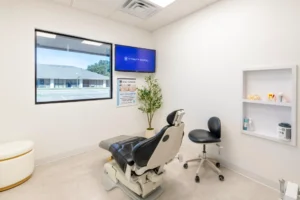
Our state-of-the-art dental office is designed with your comfort in mind. Digital X-rays reduce radiation exposure by up to 90% compared to traditional film. Soft-tissue lasers allow for quicker procedures with less bleeding and pain. Intraoral cameras let you see what we see, so there are no surprises. 3D cone beam imaging ensures extremely accurate dental implant placements and diagnoses.
Frequently Asked Questions About Dental Visits in Plano
How long does a standard dental cleaning and exam usually take?
Most appointments take 60 to 90 minutes, including check-in, X-rays (if needed), cleaning (30–45 minutes), the dentist exam (10–15 minutes), and treatment discussion.
Can I decline fluoride treatment during my dental visit?
Yes. Fluoride treatment is optional, though it’s highly effective at strengthening enamel and preventing decay. We’ll explain the benefits and let you decide what’s right for you.
What is the difference between a regular cleaning and a deep cleaning?
A regular cleaning removes plaque and tartar above the gum line. A deep cleaning (scaling and root planing) treats gum disease by removing buildup below the gum line and is usually done under local anesthesia.
What if I don’t have dental insurance?
Vitality Dental offers an in-house dental plan with no deductibles, no yearly maximums, and no waiting periods. You get immediate eligibility for preventive care and discounts on restorative and cosmetic treatments.
What to Do Next: Schedule Your Visit at Vitality Dental
Whether you’re overdue for a cleaning, new to Plano, or looking for a dental office where you can smile and laugh, Vitality Dental offers a boutique, high-touch experience that puts your comfort first.
Dr. Andrew Kung and our passionate, caring, competent dental team are here to answer your questions, address your concerns, and create a personalized treatment plan that fits your goals and budget.
New patients and emergency appointments are always welcome. We’re conveniently located at 1220 Coit Rd #106, Plano, TX 75075—right after Medical City Plano.
Call us today to experience comprehensive, patient-centered care in a modern, welcoming environment. We speak your language—English, Japanese, Chinese, and Spanish.

 Back-to-School Dental Checklist for Plano ISD Families