
Key Takeaways
- Cultural fit matters in healthcare: A Japanese-speaking dentist who understands omotenashi (hospitality) and detailed explanation can reduce anxiety and improve outcomes for expatriates and their families.
- Search strategically: Combine Google Maps (in Japanese and English), specialty directories like JapaneseDoctor.com, and community networks near Toyota HQ and Legacy West to find truly bilingual practices.
- Verify before you book: Use our phone scripts and evaluation checklist to confirm the office has Japanese-speaking staff, handles US and Japanese insurance, and offers the gentle, meticulous care you expect.
- Plano is a hub: With proximity to Mitsuwa Marketplace, Legacy West, and major corporate headquarters, North Texas has a growing number of culturally sensitive dental practices—knowing how to evaluate them is key.
Why Finding a Japanese-Speaking Dentist in Plano Matters
Moving to North Texas—whether for a corporate assignment at Toyota headquarters, a family relocation to Frisco or Allen, or retirement near the Preston Road corridor—brings excitement and opportunity. It also brings a very practical challenge: finding healthcare providers who truly understand you.
Dental care sits at the intersection of medicine, communication, and trust. When you’re explaining a dull ache that comes and goes (zukizuki), or a sharp, throbbing pain (gangang), precise language matters. Misunderstandings can lead to misdiagnosis, unnecessary procedures, or—just as damaging—avoidable anxiety.
At Vitality Dental in Plano, we’ve seen firsthand how cultural competence improves outcomes. Our team speaks English, Japanese, Chinese, and Spanish, and we’ve built our practice around the principle that your comfort is as important as your smile. But whether you choose our office or another, this guide will help you find a dentist in the greater DFW area who can communicate clearly, respect your expectations, and deliver the meticulous, gentle care you’re used to.
The Role of Omotenashi in Dental Care
Japanese patients often describe feeling rushed or dismissed in US healthcare settings. The concept of omotenashi—anticipating needs, providing thorough explanations, and creating a welcoming environment—is not standard in every American dental office. A truly Japanese-speaking practice doesn’t just translate words; it translates expectations. That means:
- Detailed treatment explanations before any procedure, not after.
- Transparency around cost and insurance, with written estimates.
- Respect for preventative care philosophies, including the Japanese emphasis on periodontal health and long-term planning.
- Accommodation for family dynamics, such as elderly parents who may not speak English or children navigating bilingual school environments.
This isn’t about finding “better” care—it’s about finding care that fits your communication style, reduces anxiety, and builds the trust necessary for long-term oral health.
Step 1: Search Smart—Where to Look Beyond Google
Most people start with a Google search. That’s fine—but if you only type “dentist near me,” you’ll miss practices that specifically serve Japanese-speaking families. Here’s how to search strategically.
Using Google Maps with Japanese and English Keywords
Google Maps is your most powerful tool, but you need to use it in both languages to surface the right results.
Try these exact searches:
- In English:
Japanese-speaking dentist near Toyota Plano
Bilingual dentist Plano Japanese
Dentist Legacy West Japanese staff - In Japanese:
プレイノ 日本語 歯医者
ダラス 日本人 歯科
フリスコ 日本語対応 デンタルクリニック
Why both? Some practices optimize their Google Business Profile in English only, while others include Japanese keywords. Searching in both languages doubles your chances of finding hidden gems.
What to look for in the results:
- “Speaks Japanese” attribute on the Google Business Profile.
- Reviews in Japanese. If multiple patients are writing reviews in Japanese, that’s a strong signal the office genuinely supports your language.
- Photos of bilingual signage or staff bios mentioning language skills.
- Proximity to landmarks you know: Mitsuwa Marketplace, Legacy West, the Shops at Legacy, or Windhaven Park.
Specialty Directories and Community Platforms
Google won’t show you everything. Supplement your search with these resources:
JapaneseDoctor.com
A directory specifically for Japanese-speaking healthcare providers in the US. Filter by “Dentist” and “Texas.” Not every practice is listed, but those that are have been vetted by the community.
Vivinavi Dallas
A classifieds and community board for Japanese expats. Check the “Medical/Dental” section for recommendations, ads, and patient experiences.
Yelp with Language Filters
Search “dentist Plano” and then scan reviews for mentions of “Japanese,” “bilingual,” or specific staff names. Patient stories often reveal whether the “Japanese-speaking” claim is real or just a front-desk translator.
Facebook Groups
Join groups like “Japanese in Dallas-Fort Worth” or “Toyota Families Plano.” Post a question asking for dentist recommendations. You’ll often get candid, detailed responses from families who’ve been through the same search.
Community Bulletin Boards
If you shop at Mitsuwa Marketplace on Legacy Drive, check the physical bulletin board near the entrance. Local practices sometimes post flyers in Japanese.
Leveraging Corporate and School Networks
If you or your spouse works at Toyota, NTT Data, or another Japanese company with a North Texas presence, ask HR or your relocation coordinator. Many companies maintain informal lists of bilingual providers.
Similarly, if your children attend Japanese language schools or weekend programs in the area, other parents are an excellent resource. They’ve already navigated this process and can tell you which offices are truly family-friendly and which just have a translator app.
Step 2: Evaluate the Office—What to Look For
You’ve found three or four promising practices. Now it’s time to dig deeper. Not every office that claims to be Japanese-friendly actually delivers on that promise.
Bilingual Staff vs. Translation Services
There’s a big difference between:
- A Japanese-speaking dentist or hygienist who can explain your diagnosis, walk you through treatment options, and answer follow-up questions in real time.
- A front-desk staff member who speaks some Japanese but hands you off to an English-only clinical team.
- A translation app or phone service used only when there’s a problem.
What to ask (see scripts below):
“日本語を話すスタッフは常駐していますか?歯科医師ですか、それとも受付ですか?”
(“Do you have Japanese-speaking staff on-site? Is it the dentist, or just the front desk?”)
Ideally, you want a practice where the dentist or hygienist speaks Japanese. If that’s not possible, confirm that a fluent staff member will be in the room during your exam and treatment discussions.
Cultural Sensitivity Signals
Beyond language, look for signs that the office understands Japanese patient expectations:
- Detailed written treatment plans with cost breakdowns, not just verbal estimates.
- Time built into appointments for questions and explanations. Rushed appointments are a red flag.
- Preventative care alignment. Does the practice emphasize regular cleanings, periodontal assessments, and long-term planning? Or is the focus purely reactive (fixing problems after they emerge)?
- Respect for patient autonomy. In Japan, patients are often given multiple options and encouraged to think it over. High-pressure sales tactics for cosmetic procedures or same-day treatment should raise concerns.
Technology and Clinical Standards
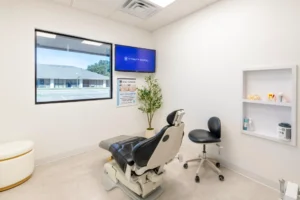
At Vitality Dental, we invest heavily in advanced dental technology—not because it’s flashy, but because it improves accuracy, reduces discomfort, and shortens treatment time. When evaluating any practice, ask about:
- Digital X-rays and 3D cone beam imaging for precise diagnostics and implant planning.
- Intraoral cameras so you can see exactly what the dentist sees.
- Soft-tissue lasers for gum treatments that heal faster with less pain.
- Sedation options (nitrous oxide, oral sedation) if you or a family member experiences dental anxiety.
Modern equipment isn’t a luxury—it’s a baseline for safe, comfortable care.
Step 3: Make Contact—Phone and Text Scripts in Japanese
Once you’ve narrowed your list, it’s time to call or text. Many offices now accept appointment requests via text or online forms, which can be less intimidating if you’re worried about language barriers.
First Contact Script (Appointment Inquiry)
By phone:
“もしもし、初診の予約を取りたいのですが、日本語を話すスタッフはいらっしゃいますか?”
(“Hello, I’d like to schedule a new patient appointment. Do you have Japanese-speaking staff?”)
By text or email:
“初めまして。プレイノ周辺で日本語対応の歯科医院を探しています。日本語を話す歯科医師またはスタッフはいますか?また、保険についても相談したいです。”
(“Hello. I’m looking for a Japanese-speaking dental office near Plano. Do you have a dentist or staff who speak Japanese? I’d also like to discuss insurance.”)
Questions to Ask About Services and Insurance
Once you’ve confirmed language support, ask these follow-up questions:
- “定期検診とクリーニングの費用はいくらですか?保険は使えますか?”
(“How much is a routine exam and cleaning? Can I use my insurance?”) - “日本の海外旅行保険(Kaigai Ryokou Hoken)の請求書を発行できますか?”
(“Can you provide an itemized receipt for Japanese overseas travel insurance claims?”) - “緊急の場合、土曜日や夕方の予約は可能ですか?”
(“In an emergency, do you offer Saturday or evening appointments?”) - “子供の治療も対応していますか?日本語で説明してもらえますか?”
(“Do you treat children? Can you explain treatment in Japanese?”) - “歯科恐怖症があるのですが、リラックスできる方法はありますか?”
(“I have dental anxiety. Do you offer sedation or other ways to help me relax?”)
These questions accomplish two things: they confirm the office can meet your practical needs, and they signal that you expect clear, respectful communication.
Understanding Insurance: US PPO Plans and Japanese Overseas Travel Insurance
Navigating dental insurance in the US can be confusing, especially if you’re used to Japan’s national health system. Here’s what you need to know.
How US Dental PPO Plans Work
Most employer-sponsored dental plans in the US are PPO (Preferred Provider Organization) networks. Common carriers include Delta Dental, Cigna, Aetna, and MetLife.
Key differences from Japanese insurance:
- Annual maximums: Most plans cover up to $1,000–$2,000 per year. After that, you pay out of pocket.
- Preventative care is usually 100% covered: Cleanings, exams, and X-rays twice a year.
- Basic procedures (fillings, extractions) are typically 70–80% covered.
- Major procedures (crowns, bridges, implants) are often 50% covered, with waiting periods for new enrollees.
At Vitality Dental, we provide complimentary insurance benefits advice. Before we start any treatment, we’ll verify your coverage, explain your out-of-pocket cost, and give you a written estimate. No surprises.
Filing Claims with Japanese Overseas Travel Insurance (Kaigai Ryokou Hoken)
If you’re on a temporary assignment and carry Japanese overseas travel insurance, you can often get reimbursed for dental treatment in the US—but you’ll need to pay upfront and file a claim afterward.
What you’ll need:
- Itemized receipt in English, showing procedure codes (CDT codes in the US).
- Diagnosis and treatment notes from your dentist.
- Claim form from your insurance company (usually available online).
Most practices in the US do not bill Japanese insurers directly. At Vitality Dental, we’re experienced in providing the detailed documentation Japanese insurers require. We’ll make sure your receipt includes everything you need to maximize your reimbursement.
Pro tip: If you’re uninsured or your plan has a low maximum, ask about our in-house dental plan. It offers preventive care, discounts on treatment, and no waiting periods—often a better value than traditional insurance for expatriates on short-term assignments.
What to Expect at Your First Appointment
You’ve booked your appointment. Here’s what happens next.
Comprehensive Exam and Treatment Planning
At Vitality Dental, your first visit is about building a complete picture of your oral health. We don’t rush. A typical new patient appointment includes:
- Medical and dental history review (in Japanese, if you prefer).
- Digital X-rays and intraoral photos so you can see what we see.
- Comprehensive oral exam: teeth, gums, bite, TMJ, and oral cancer screening.
- Treatment plan discussion. If we find cavities, gum disease, or other issues, we’ll explain your options, show you the costs, and let you decide. No pressure.
Our goal is to create a long-term plan that protects your smile and fits your budget. If you’re only in Texas for a few years, we’ll prioritize what’s urgent and help you coordinate care when you return to Japan.
Anxiety Management and Sedation Options
If you’re nervous—and many people are—you’re in good company. At Vitality Dental, we cater to those with dental phobia. We offer:
- Nitrous oxide (laughing gas): Mild, safe, wears off quickly. Great for cleanings or fillings.
- Oral sedation: A pill taken before your appointment to help you relax. You’ll need a driver.
- Clear communication: We explain every step before we do it. No surprises.
Your comfort is as important as your clinical outcome. If you need to stop, raise your hand. If you need more time to think about a treatment, that’s okay. We’re here to support you, not rush you.
Geographic Access: Finding Care Near You in DFW
Plano and the surrounding North Texas area are home to a growing Japanese community, thanks in large part to corporate relocations. Here’s how geography plays into your search.
Proximity to Key Landmarks
Vitality Dental is located at 1220 Coit Rd #106, Plano, TX 75075—right after Medical City Plano, near the intersection of Coit and Parker. We’re minutes from:
- Mitsuwa Marketplace (Legacy Drive & US-75): A 10-minute drive.
- Toyota North America Headquarters / Legacy West: 8 minutes.
- Shops at Legacy / Tennyson Parkway: 7 minutes.
- Preston Road corridor (near Stonebriar): 12 minutes.
- Frisco, Allen, McKinney: 15–20 minutes, easy access via US-75 or Dallas North Tollway.
If you live or work in these areas, you’re close enough for a lunch-hour cleaning or an after-work appointment. We offer extended hours and Saturday availability to fit your schedule.
Access from Other Parts of DFW
If you’re in Richardson, Carrollton, or North Dallas, Plano is a straight shot up Central Expressway. If you’re in Addison or Far North Dallas, the Tollway makes the drive quick and predictable.
Many of our Japanese-speaking patients drive from across the metroplex because they value the consistency, technology, and cultural understanding we offer. But if proximity is a priority, use the search strategies in Step 1 to find options closer to home.
What To Do Next
Finding a dentist you trust shouldn’t be stressful. Whether you’re new to Texas, supporting aging parents, or looking for a pediatric dentist who can speak to your bilingual children in both languages, the right practice is out there.
Start with these three steps:
- Search using the bilingual keywords and directories we outlined in Step 1.
- Use our phone scripts to confirm language support and ask the right questions.
- Schedule a consultation or cleaning to experience the office firsthand. Trust your instincts—if the team makes you feel rushed or dismissed, keep looking.
At Vitality Dental in Plano, we’ve built our practice around the principle that everyone deserves not only a healthy and beautiful smile but also overall health—and we can help. Our boutique, high-touch team speaks English, Japanese, Chinese, and Spanish. We use state-of-the-art technology to deliver accurate, comfortable care. And we understand that for many of our Japanese-speaking patients, a dental visit isn’t just about teeth—it’s about trust, communication, and feeling truly understood.
Ready to get started?
Call us at (972) 782-5208, text us in Japanese, or book online. New patients and emergency appointments are always welcome.
People Also Ask
Does the dental clinic accept Japanese overseas travel insurance directly?
Most US dental offices, including Vitality Dental, do not bill Japanese insurers directly. However, we provide detailed, itemized receipts with CDT procedure codes and diagnosis notes so you can file your claim for reimbursement. We’re experienced in the documentation Japanese insurers require.
Is there a Japanese-speaking hygienist available for the cleaning appointment?
At Vitality Dental, we have bilingual team members who can assist during your cleaning and explain preventive care recommendations in Japanese. We prioritize continuity, so you’ll see the same hygienist whenever possible.
How does the cost of a root canal in Plano compare to dental costs in Japan?
US dental care is generally more expensive than in Japan, especially for major procedures. A root canal in Plano typically ranges from $800–$1,500 depending on the tooth, compared to ¥30,000–¥100,000 in Japan. However, if you have US dental insurance, your out-of-pocket cost may be lower. We provide written estimates before any treatment.
Can the dentist explain the treatment plan in Japanese to my elderly parents?
Yes. At Vitality Dental, Dr. Kung and our bilingual team members can walk your parents through their diagnosis, treatment options, and costs in Japanese. We understand that elderly patients may have specific concerns about medications, mobility, and coordination with their physicians, and we take the time to address those thoroughly.
What is the difference between US dental cleaning procedures and those in Japan?
US cleanings typically emphasize scaling and polishing, with fluoride treatment as standard. Japanese cleanings often include more detailed periodontal charting and may focus more on gum health and plaque control education. At Vitality Dental, we combine both approaches: meticulous periodontal assessment with the efficiency and technology of modern US preventive care.
Do you offer emergency dental services for non-English speakers?
Yes. If you have a dental emergency—severe pain, a broken tooth, or swelling—call us immediately. We’ll do our best to see you the same day, and we have Japanese-speaking staff available to help you understand your treatment options and costs.

 What Really Happens at the Dentist: A Plano Patient’s Play-by-Play